Health and Safety Policy for Deep Cleaning Kensington
 Deep Cleaning Kensington services must be carried out with a clear commitment to health, safety, and consistent working standards. This policy sets out the practical measures used to protect clients, staff, and anyone else who may be affected during a cleaning visit. It applies to all types of deep cleaning in Kensington, including residential, commercial, and specialist cleaning tasks.
The purpose of this policy is to reduce risk, prevent accidents, and ensure that every cleaning task is completed in a controlled and professional way. Safety is never treated as an afterthought; it is built into planning, preparation, and execution from the start. All operatives are expected to follow safe working methods, use equipment correctly, and report concerns without delay.
 Before any deep cleaning service in Kensington begins, the work area is assessed for hazards such as wet floors, sharp objects, fragile surfaces, blocked access points, poor ventilation, and exposure to cleaning chemicals. This initial review helps determine the safest sequence of work and the correct materials to use. Where necessary, cleaning is adjusted to suit the condition of the property and the sensitivity of the surfaces involved.
Every cleaner is required to receive appropriate training in manual handling, chemical awareness, equipment use, emergency response, and infection control. Training is reinforced through supervision and regular refresher sessions. Staff must understand how to work safely in occupied and unoccupied premises, how to move items without causing strain, and how to avoid cross-contamination when moving between areas.
Personal protective equipment is used whenever the task demands it. This may include gloves, masks, aprons, slip-resistant footwear, and eye protection. The choice of equipment depends on the nature of the deep cleaning Kensington assignment and the risks identified during assessment. PPE must be worn correctly, maintained in good condition, and replaced when damaged or no longer suitable.
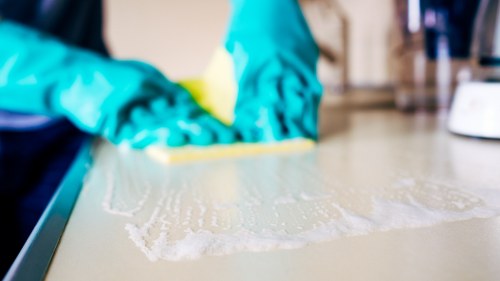 Cleaning products are selected carefully to match the surface and the job. Only approved products are used, and all chemicals are stored, handled, and diluted in accordance with the manufacturer’s instructions. Strong chemicals are never mixed, and cleaners are trained to recognise warning labels and safety data information. Special care is taken in enclosed spaces to ensure adequate ventilation and to minimise exposure to fumes.
Housekeeping is central to safe working practice. Tools, cables, and waste materials are kept organised to reduce trip hazards. Floors are left as dry and secure as possible during and after cleaning, and warning signs are placed where there is a risk of slipping. When moving equipment, operatives use suitable lifting techniques and seek assistance for heavy or awkward items to avoid injury.
Health and safety in deep cleaning Kensington also includes respect for the property being cleaned. Furniture, fittings, electrical outlets, and delicate items are protected during work. Water use is controlled to avoid damage, and electrical equipment is checked before use to make sure it is safe and suitable. Where a risk of electrical contact exists, the area is isolated until the task can be completed safely.
Waste is managed responsibly and in a way that supports safe practice. Dirty materials, disposable items, and debris are collected promptly and separated where appropriate. If hazardous waste is encountered, it is handled according to safe disposal procedures and never left in a place where it could create a risk to others. This approach helps maintain hygiene while also supporting a tidy and secure working environment.
 Emergency procedures are part of the operating standard for deep cleaning in Kensington. Staff must know how to respond to spills, cuts, burns, chemical splashes, fire alarms, and other unexpected incidents. First aid provisions are kept available where needed, and all incidents are documented so that lessons can be learned and recurrence reduced. If a task cannot be completed safely, it is paused until the hazard is controlled.
Communication is essential throughout the cleaning process. Team members confirm the scope of work, highlight any risks they notice, and ensure that everyone on site understands what is happening. In shared environments, caution is used to avoid disrupting occupants or exposing them to unnecessary risk. Clear communication also supports good coordination when multiple rooms or areas are being cleaned at the same time.
Supervisors are responsible for monitoring standards, checking compliance, and ensuring that safety controls remain effective. They review risk factors, confirm that equipment is functioning properly, and make sure that staff are not placed under avoidable pressure. Where improvements are identified, action is taken promptly so that the overall safety of the Deep Cleaning Kensington operation continues to improve.
Health and safety records are kept where appropriate to track training, inspections, incidents, and corrective actions. These records support accountability and help maintain consistent standards across all cleaning jobs. They also provide evidence that the service is managed responsibly and that practical measures are being taken to reduce risk over time.
 In summary, this deep cleaning Kensington policy is designed to create a safe, careful, and reliable approach to every project. By combining proper training, risk assessment, suitable equipment, controlled product use, and strong supervision, the service can protect people and property while delivering high standards of cleanliness. The aim is simple: to complete every deep cleaning task with professionalism, caution, and respect for everyone involved.